
Cloud Migration in Healthcare: Benefits, Security Risks & Deployment Best Practices
There is evidence that the food industry designs ultra-processed foods to be highly rewarding, to maximize craveability and to make us want more and more and more
 ElizabethMay 26, 20241 Mins read7.3k
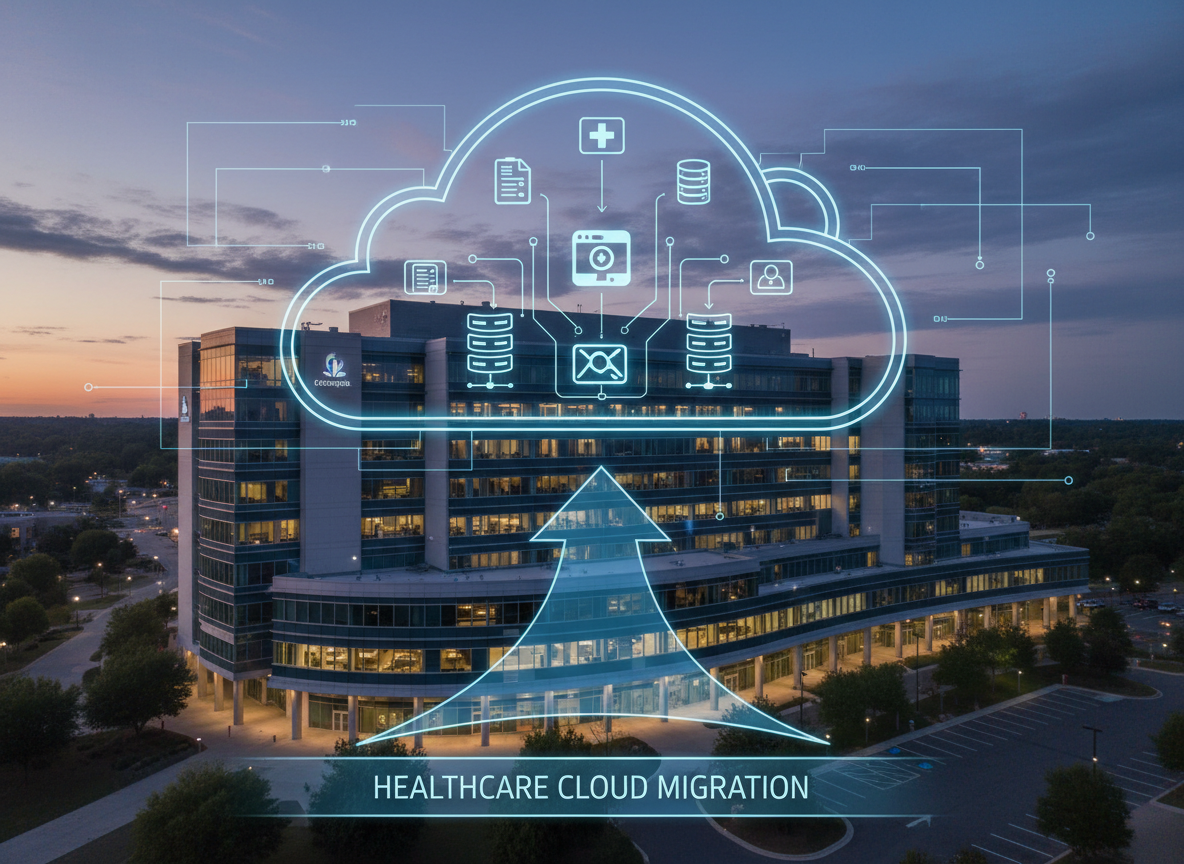
Healthcare’s cloud adoption was slow for years due to compliance anxiety, but the industry has moved past hesitation. Hospitals now recognize that sticking to outdated on-prem servers introduces more risks—downtime, outdated patches, slow scalability—than cloud platforms designed for healthcare environments.
The biggest benefit of driving cloud adoption is scalability. Radiology archives, EHRs, and telemedicine platforms demand large storage and rapid access. Cloud infrastructure scales dynamically, eliminating the need for expensive hardware expansions.
Operational efficiency is the second driver. Cloud-hosted EHRs process updates automatically, reduce IT labor, and offer superior uptime compared to aging local setups.
But the real value lies in data interoperability. Cloud environments allow seamless exchange of medical data between labs, pharmacies, imaging centers, and hospital systems. APIs built on FHIR standards make multi-provider patient journeys more connected and less fragmented.
Of course, security concerns are valid. Healthcare is the most targeted industry for cyberattacks. Cloud providers mitigate risk through encryption, zero-trust access, automated threat monitoring, and compliance frameworks like HIPAA-eligible services.
However, hospitals often make one critical mistake: assuming cloud = secure by default. Misconfigured storage buckets, weak IAM policies, and lack of auditing cause breaches—not the cloud provider. The responsibility is shared, and IT teams must understand their obligations.
Best practices for safe cloud migration include:
- Enforcing role-based access
- Encrypting data at rest and in transit
- Using managed security services
- Running continuous compliance audits
- Creating multi-region backups for disaster recovery
Cloud adoption isn’t optional anymore; it’s foundational for any healthcare system aiming for modern digital operations.


4 Comments
Leave a Reply to Nanopress Cancel reply




Why Hospitals Are Moving to Cloud Infrastructure for Data Storage
There is evidence that the food industry designs ultra-processed foods to be...

Cloud-Based Telemedicine Is Expanding Access to Healthcare
There is evidence that the food industry designs ultra-processed foods to be...




Lorem ipsum dolor sit amet, consectetuer adipiscing elit. Aenean commodo ligula eget dolor. Aenean massa. Cum sociis natoque penatibus et magnis dis parturient montes, nascetur ridiculus mus.
welLorem ipsum dolor sit amet, consectetuer adipiscing elit. Aenean commodo ligula eget dolor. Aenean massa. Cum sociis natoque penatibus et magnis dis parturient montes, nascetur ridiculus mus.
cod Lorem ipsum dolor sit amet, consectetuer adipiscing elit. Aenean commodo ligula eget dolor. Aenean massa. Cum sociis natoque penatibus et magnis dis parturient montes, nascetur ridiculus mus.
Lorem ipsum dolor sit amet, consectetuer adipiscing elit. Aenean commodo ligula eget dolor. Aenean massa. Cum sociis natoque penatibus et magnis dis parturient montes, nascetur ridiculus mus.