
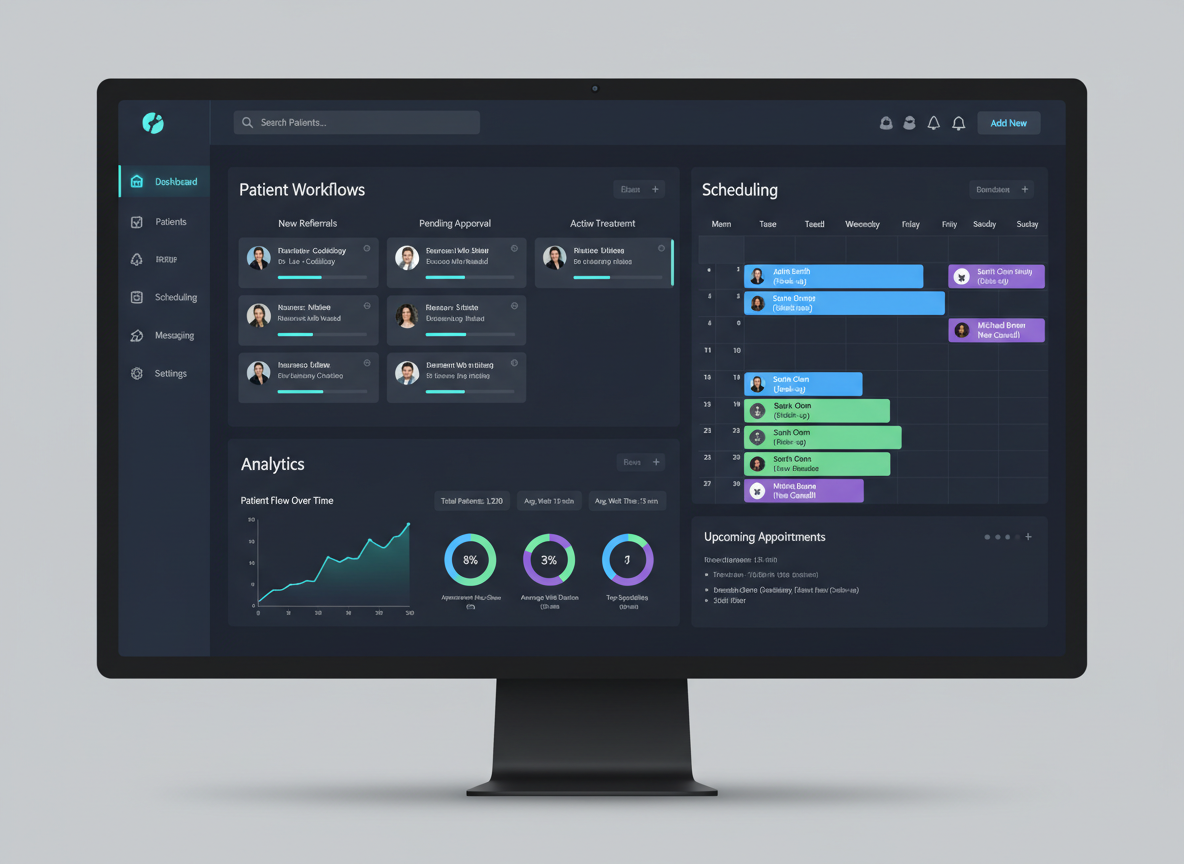

Generic SaaS solutions fail in healthcare because compliance, workflows, and documentation demands are unique. That’s why vertical SaaS—cloud platforms built specifically for healthcare—are becoming the backbone of modern patient management.
Hospitals today need more than digital forms. They need systems that coordinate appointments, track diagnostics, manage billing, automate documentation, and sync with EHRs without creating more work for clinicians. Vertical SaaS platforms are designed around these realities.
The biggest advantage is regulatory alignment. Healthcare SaaS platforms are built with HIPAA, GDPR-Health, and HL7/FHIR requirements baked into the architecture. That means providers aren’t forcing generic CRMs or ERPs to behave like clinical systems—they’re deploying software purpose-built for compliance and care.
Another major strength is workflow automation. From automated appointment reminders to intelligent patient triage, SaaS tools offload manual work that once consumed nursing time. Instead of chasing paperwork, staff manage care.
Integration is also improving rapidly. APIs now allow SaaS platforms to plug into lab systems, radiology archives, pharmacy databases, and telemedicine modules. A patient’s journey—from the moment they book an appointment to final discharge—can be tracked on a single dashboard.
Healthcare facilities also value SaaS for scalability. A small clinic can start with patient scheduling and gradually add telehealth, billing, inventory, and analytics modules as it grows. No massive upfront investments, no proprietary hardware—just recurring cloud usage.
The final push comes from analytics and AI-driven insights. Vertical SaaS platforms routinely provide operational metrics, bottleneck analysis, patient wait-time breakdowns, and compliance alerts. These insights turn administrative data into actionable intelligence.
As healthcare becomes more interconnected, vertical SaaS will evolve into the default operating system for modern medical practices.

Review Overview
Summary
Vestibulum viverra gravida fringilla. Suspendisse accumsan purus quis augue lobortis quis sagittis
The Pros
Colors Size StyleThe Cons
Expensive Duration quality- Design2
- Speed2.5
- Saving4.5
- Features3






How Healthcare SaaS Platforms Are Reducing Administrative Overload in Hospitals
There is evidence that the food industry designs ultra-processed foods to be...





Leave a comment